Is Google Going to Penalize AI-Generated Content in 2026?
Google doesn't penalize AI content outright — it penalizes unhelpful content. What Google's policies actually say, and the nuance that matters in 2026.

Does AI Content Actually Rank?
A majority of the web’s top-ranking pages are consistently AI-assisted, but it's very unusual for AI-generated content to reach top rankings. A recent Ahrefs study investigated 600,000 pages and found that the correlation between AI content percentage and Google ranking is low (0.011). In practical terms, that means that Google does not automatically demote AI-generated text, but at least for now, the most valuable real estate in search results is human-written. The highest rank (#1) on search engine results pages does not correlate with much AI usage (0–30% at most). It hints that AI may be enabling content scaling, but human-led content remains a differentiator in the highest-ranked search categories. The take-home message for publishers: high-quality, distinctive content is written by people, and it’s up to you to decide how much that matters for your brand.
Brand Risk and Audience Trust
The purpose of building a brand is to earn trust, create loyalty, and aid in recall when someone needs a product or a solution. Unverified AI content can break down trust and erode your brand if readers believe it’s generic or machine-generated. This is particularly true if you are hoping to pass off AI content as written authentically by a human. This is why, at Pangram, we decided to create and publish 100% human-written content. Our content is our point of view, it is our original research, and we believe it is an important part of maintaining trust and credibility.
In this zero-sum engagement world, brands and publishers find themselves in jeopardy: valuing the speed of AI content but also wrestling with the risks. The need to separate machine-generated text is increasingly important to users. Publishers that overlook this risk may produce content more quickly and get some easy search traffic, but end up losing long-term brand integrity.
How Quora Uses Pangram to Protect Authenticity
Pangram identifies and moderates over 1 million AI-generated content on Quora, to help maintain the website's original mission of being a trusted source for authentic, human-written responses.By incorporating an accurate AI detector, Quora can identify AI-generated or partially AI-generated content at scale that wouldn't be possible for human reviewers. For publishers themselves, the lesson is clear: AI detection isn’t a question of avoiding Google penalties—it’s about protecting your audience and brand.
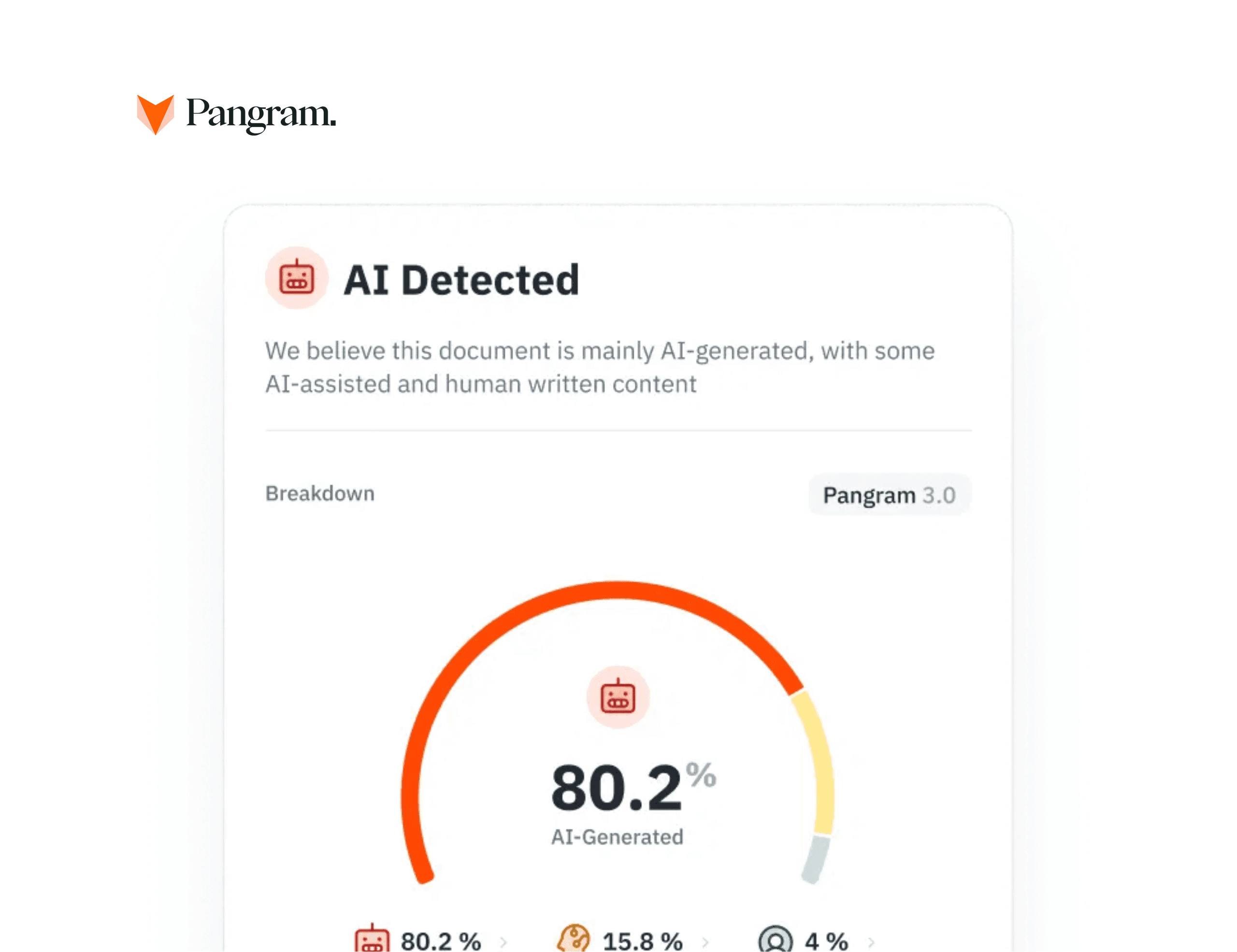
 Pangram Detecting AI-Written Content
If part of your brand value comes from a human element, like being a valued expert in your field... You do not want the authenticity of your content called into question.
How Publishers Should Utilize AI Detection in 2026
There are obviously great applications for AI, and the type of content you are creating matters. If you are making a directory resource for your industry, it would be insane not to leverage AI tools. On the other hand, there are endless examples of where low-quality AI content could disrupt the progress you have made in building a brand. Google may not penalize you, and may not suffer public outrage. But the erosion of trust is quiet, and hard to diagnose. Once your audience realizes that what you have to say can be replicated with a quick ChatGPT prompt... you've lost your authority. To help quantify AI-generated or AI-assisted tools, Pangram offers a high-accuracy detection tool that helps your team validate that your content meets brand guidelines. There can be a compromise between efficiency and brand preservation, but in order to have that line, you must be able to measure it.
Search engines may be mostly indifferent to AI-generated work; your readers are not. The future of publishing is smart AI integration: scale your output while maintaining human authenticity. Technologies such as Pangram’s API and AI Detector Chrome Extension help publishers verify their standards while maintaining speed and productivity.
Test the AI detector trusted by the world's biggest platforms with your content! Pangram AI Detection for Publishers

Alex Roitman is Head of Growth at Pangram Labs, an AI content detection company. His work focuses on how AI-generated text is reshaping writing, education, and trust in the open web.
Related reading

How can teachers tell if something is AI-generated?
No, LLMs don’t just mimic human text
Why Recruiters Need AI Detection
What does your AI detection score mean?

What happens when an AI detector makes a mistake?

Do Law Schools Use AI Detectors?