Pangram vs. Turnitin: Which is Better AI Detection?
Pangram vs. Turnitin: Which Is Better AI Detection?
If you're at all familiar with the academic integrity space, you're probably familiar with Turnitin. It's the big dog in academia, and when it comes to plagiarism detection, for good reason.
Schools nationwide use Turnitin to check student work for plagiarism—and you'd think that since it's already a big part of workflows, making use of its AI detection features would be a natural next step.
But while Turnitin's AI detection system can be useful in a pinch, AI-generated content goes far, far beyond the classroom. We found that 67% of people who read online have encountered misleading AI-generated information—and yet this same group remains concerned about false positive rates.
Accuracy remains important both in and outside of the classroom.
That's why when we put Pangram and Turnitin head-to-head, accuracy is the most important thing we evaluated.
Today, I'll walk you through our research, covering detection performance, false positive rates, language support, accessibility, pricing, and deployment options to see which platform is best for your needs.
Pangram vs Turnitin: The Rundown
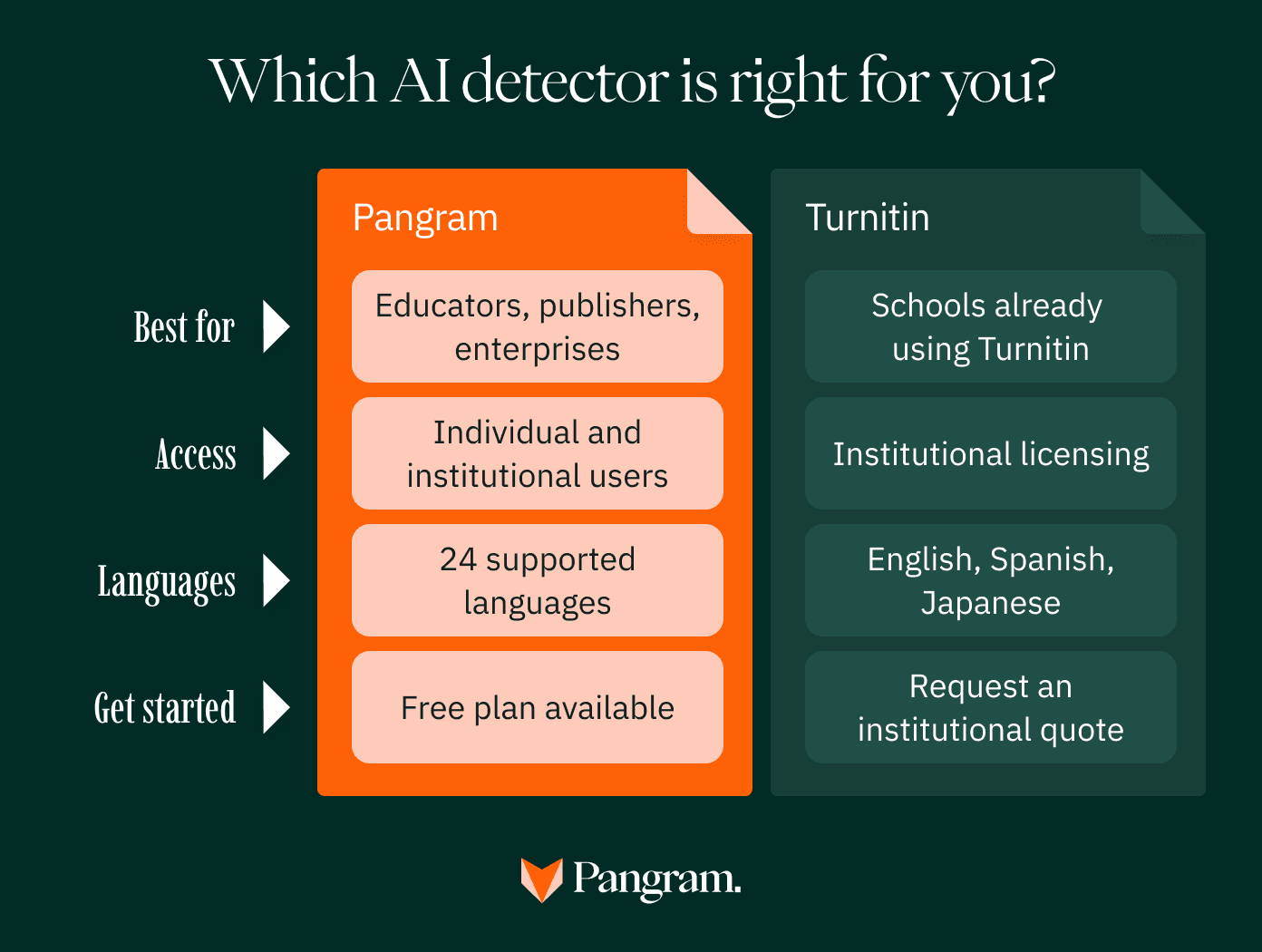
While similar at first glance, Pangram and Turnitin approach AI detection with fundamentally different priorities in mind. Turnitin is a wider ecosystem that many academic institutions have already implemented, which also contains AI detection features.
Pangram, on the other hand, was built specifically for AI detection first above all else.
| Pangram | Turnitin | |
| Detection accuracy | 99.26% overall; >99.9% on GPT-4 | 76.8% on GPT-4 |
| False positive rate | 1 in 10,000 (UChicago-verified) | 1 in 200 |
| ESL bias | Trained to minimize bias across 24+ languages | Public concerns about non-native English speaker bias |
| Pricing model | Free plan available; paid plans from $15/month | Institution-licensed |
| Language support | 24 languages | English, Japanese, and Spanish |
| LMS integrations | Canvas, Blackboard, Google Classroom | Canvas, Moodle, Blackboard, Google Classroom |
| Best for | Educators, publishers, higher education institutions, enterprise teams | K-12 and higher education institutions already using Turnitin |
| Source | Pangram's 2024 Technical Report | Turnitin's 2024 Technical Report |
What is Pangram?
Pangram is an AI detection platform created for educators, publishers, admissions teams, and really any individual or organization that needs to evaluate the origin of a piece of writing. If you need to know if AI was used to create something, we can help.
Our methods are what set us apart from other detectors. Early AI detection tools over-focused on surface-level measurements like perplexity and burstiness.
Because of this, we built Pangram to address two of the biggest problems in AI detection: false positives and humanized AI content.
Our models are trained on millions of examples of both human and AI-generated writing, allowing them to correctly identify generated text without incorrectly flagging human work.
The result? A detector designed to look at the full document rather than a handful of isolated signals.
Today, Pangram supports detection across 24 languages and offers a web platform, Chrome Extension, LMS integrations, and an Enterprise API for organizations that need to verify content at scale.
What Is Turnitin
If you’ve been through a university system in the last two decades, you'll know this name! Turnitin is an academic integrity platform best known for its plagiarism detection software. Their latest offering came in 2023, when the company expanded to include AI writing detection (a move that made so much sense).
Many schools were already using Turnitin to check student submissions against large databases of published and submitted work. Adding AI detection allowed institutions to evaluate both plagiarism and AI-generated writing alongside each other.
So, as a result, Turnitin is often adopted as part of a broader academic integrity program rather than as a standalone AI detection tool.
Its primary audience remains K-12 schools and universities that need centralized systems for managing academic integrity at scale.
Accuracy
For anyone evaluating an AI detection tool, accuracy is THE metric to be concerned about. Luckily, no one has to guess about accuracy when it comes to either tool here. Both Pangram and Turnitin have published technical reports, so we can compare the numbers directly.
Before we get into them, it's worth clarifying what accuracy means here because the term gets tossed around liberally in AI detection. There are really only two relevant metrics here, so it's simple to understand.
-
Recall rate: How often does the detector correctly identify AI-generated content?
-
False positive rate: How often does the detector incorrectly flag human writing as AI?
Most AI detectors on the market right now lean a little too heavily one way or the other. It's easy to win in one area, but winning in both is much harder. Fortunately, both Pangram and Turnitin do fairly well in this department.
| Pangram | Turnitin | |
| GPT-4 detection rate | >99.9% | 76.8% |
| False positive rate | 1 in 10,000 | 1 in 200 |
Thanks to Turnitin's technical report, we know that researchers found a 76.8% recall rate on GPT-4 content when testing their tool. This means that in technical trials, Turnitin missed one out of every four AI-generated submissions.
Similarly, Pangram's technical report found that Pangram had a recall above 99.9% on the same model family. And for institutions that review large volumes of student work, that's a pretty substantial gap between the two tools, with Pangram catching a much larger percentage of generated content.
Accuracy claims like the ones discussed above are only useful if they're open to scrutiny and regularly tested and reviewed. That's why we publish benchmark data and support independent evaluation through academic partnerships and researcher access programs. Multiple third-party studies have measured Pangram's performance directly.
The story becomes even more interesting when you look at false positives. Turnitin reports a false positive rate of approximately 0.51%, or about 1 in 200 documents. Pangram's benchmark testing reports a false positive rate of 1 in 10,000 overall, with academic essays performing even better at approximately 1 in 25,000.
When I compare the available benchmark data, the winner in the accuracy area is obvious. Pangram detects a larger percentage of AI-generated content while generating way fewer false positives.
False positive rate
Missing AI-generated text is frustrating, but incorrectly accusing a student of cheating in an academic integrity case, in my opinion, is much worse.
In a classroom, newsroom, or workplace, a false positive can have real consequences. A student may be accused of academic dishonesty, a writer may have their work questioned, or an editor may lose confidence in a legitimate submission. If users can't trust the results, the detector's accuracy becomes much less meaningful.
According to Turnitin, the platform reports a false positive rate of 0.51%, or roughly 1 in 200. That means approximately one authentic document is incorrectly flagged for every 200 documents evaluated.
Pangram's published benchmark testing reports a false positive rate of 1 in 10,000 overall. On an academic essay dataset comparable to Turnitin's evaluation, that rate drops further to 1 in 25,000.
| Pangram | |
| Overall false positive rate | 1 in 10,000 |
| Academic essay false positive rate | 1 in 25,000 |
These figures have been independently verified by the University of Chicago, which is why we can stand behind them when institutions use Pangram to make decisions about student work.
ESL bias
A major ongoing concern with AI detection is whether non-native English writers are more likely to be incorrectly flagged as using AI. Since non-native English speakers often write in ways that produce lower perplexity scores, human writing can sometimes appear statistically similar to AI-generated text.
Every AI detector claims that reducing English as a Second Language (ESL) bias is a priority. But the real question is whether the numbers support that claim.
During our ESL evaluation, the model maintained extremely low false positive rates across both ESL and non-ESL datasets:
| Dataset | Pangram FPR | Turnitin FPR |
| L2 English (ESL) 300+ words | 0.02% | 1.4% |
| L1 English (non-ESL) 300+ words | 0.00% | 1.3% |
These results are consistent with Pangram's broader approach to AI detection, which evaluates document-level patterns rather than relying on individual vocabulary choices or rigid writing templates.
If you'd like a deeper look at the underlying research, see our analysis of AI detection accuracy on ESL writing and our multilingual AI detection capabilities.
Availability
While perhaps obvious, an AI detector isn't useful if you can't use it! This is one of the biggest differences between Pangram and Turnitin, and it's worth mentioning here because many educators do need an individual solution.
Pangram is for everyone. Individual educators, publishers, legal teams, enterprise content reviewers, you name it. Create an account and start using the platform immediately, including four free scans per day. Go forth and try it out right now if you haven't already.
Turnitin, on the other hand, is hard to access unless it's been granted on an institution level. Individual educators are largely out of luck here. Access to Turnitin is kept for those who have an institutional license, typically managed by a school or university.
Pangram's not just for the individual though. Universities and school districts can also deploy Pangram at scale through institutional licensing, giving faculty and staff unlimited access alongside LMS integrations.
In other words, Pangram is available for individual use, while still supporting the institutional deployments that Turnitin is built for.
| Pangram | Turnitin | |
| Web dashboard | Yes | No |
| Chrome Extension | Yes | No |
| Enterprise API | Yes | No |
| Canvas | Yes | Yes |
| Blackboard | Yes | Yes |
| Google Classroom | Yes | Yes |
| Moodle | Yes | Yes |
| University-wide use | Yes | Yes |
Pricing
On a similar note, Turnitin is equally coy about its pricing. If you're not an institution, no pricing info for you.
Pangram makes our pricing easy to access and compare. Individual users can get started for free with four scans per day, with paid plans starting at $15 per month for up to 600 AI scans. Institutional licensing is also available for schools and organizations that need broader access, so we can meet each type of need.
Turnitin, though, does not publish pricing publicly. Institutional licenses are available by quote, with pricing typically negotiated directly with schools. There is no individual plan and no self-serve option for someone who wants to evaluate the detector before making a purchasing decision, so we can’t fully speak on their pricing.
| Pangram | Turnitin | |
| Free tier | Yes4 credits/day | No |
| Individual paid plans | $15/month600 credits/month | Not available |
| Institutional licensing | Available | Required |
| Public pricing | Yes | No |
Supported languages
Language support is one of the more significant practical differences between the two platforms.
Pangram supports 24 languages, including English, Arabic, Chinese, Dutch, Czech, French, German, Greek, Hindi, Hungarian, Italian, Japanese, Korean, Persian, Polish, Portuguese, Romanian, Russian, Spanish, Swedish, Turkish, Ukrainian, Urdu, and Vietnamese.
Turnitin, on the other hand, supports three languages: English, Japanese, and Spanish. However, our AI paraphrasing and bypassing detection capabilities are only available for English submissions.
For institutions serving international student populations, or enterprise teams reviewing content across multiple languages, that gap is meaningful. A detector that only supports three languages creates blind spots, leaving AI-generated content in unsupported languages outside the scope of review.
How can I use Pangram?
One advantage Pangram has over Turnitin is flexibility. Rather than being limited to a single workflow, Pangram can be used in several different ways depending on how you review content:
-
Dashboard: You can use Pangram's free dashboard to paste text or upload documents and check them for AI content. From the dashboard, you can see a detailed report of AI writing, including a chart of where AI was found and highlights of common AI phrases.
-
Chrome extension: You can use the Pangram Chrome extension to check any text for AI content by selecting it and choosing "Check for AI Content" from the right-click menu. This works anywhere on the internet, including Canvas Speedgrader and discussion boards. The extension also adds a button in Google Docs to instantly check the document for AI.
-
LMS integration: Pangram offers various integrations, including Canvas and Google Classroom. These are only available via institutional license
Find the right AI detection platform for your team
Overall, both Pangram and Turnitin have produced substantial evidence to support their claims around accuracy, but Pangram is two orders of magnitude more accurate than Turnitin compared to other AI detectors.
If you want to see the difference for yourself, Pangram is free to try. Run your first scan on our AI detector, use the Chrome Extension to check content as you browse, or explore our Enterprise API to see how it works.
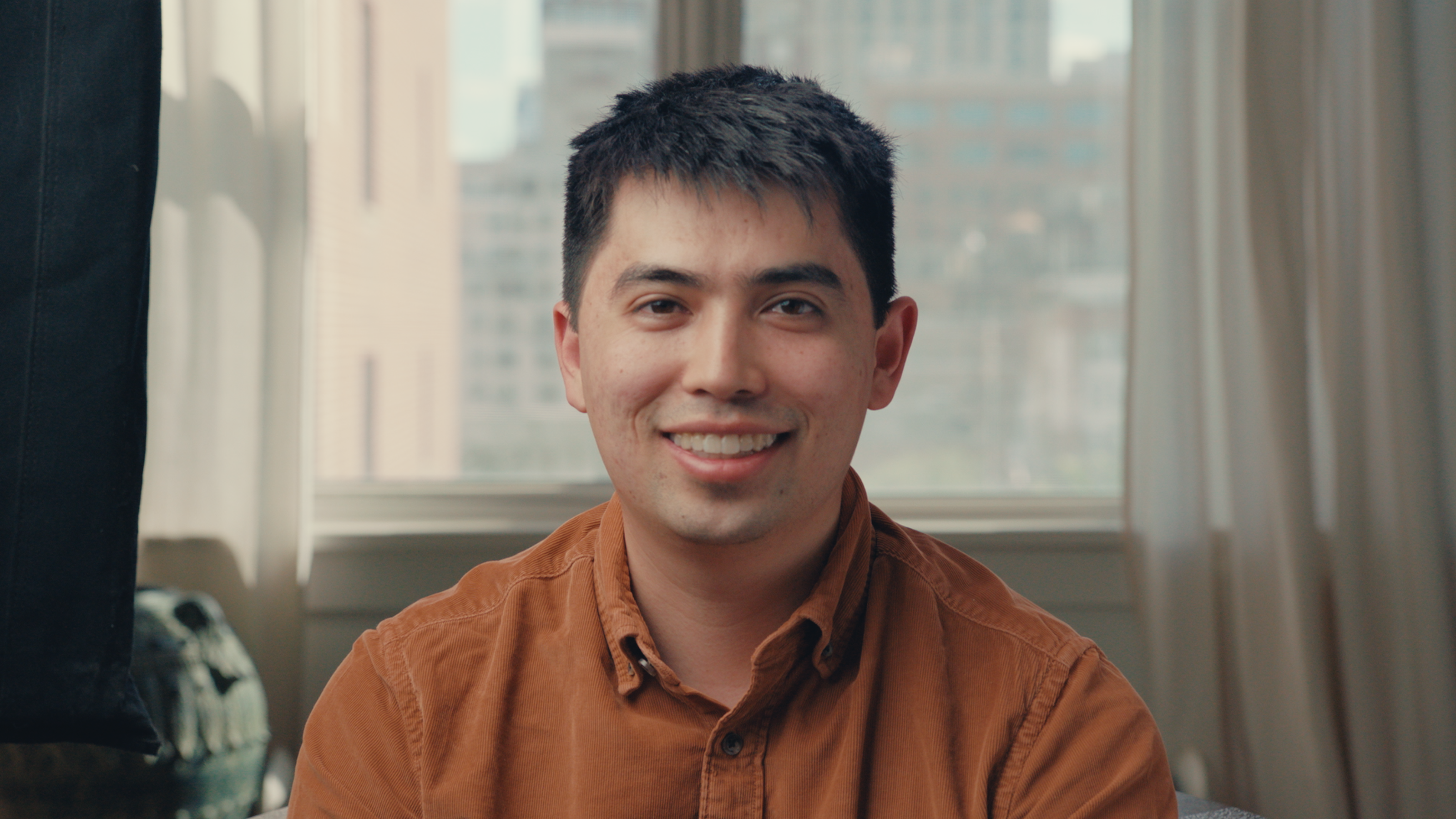
Max is a seasoned machine learning engineer. He most recently worked on autonomous vehicles at Nuro, leading their active learning effort. He has a long history of deploying successful machine learning products at Google, Two Sigma, and Yelp.
Max holds a B.S. in theoretical computer science and an M.S. in artificial intelligence from Stanford University. In addition to his passion for building, he is also an active member of the Magic: the Gathering cube community.
Related reading
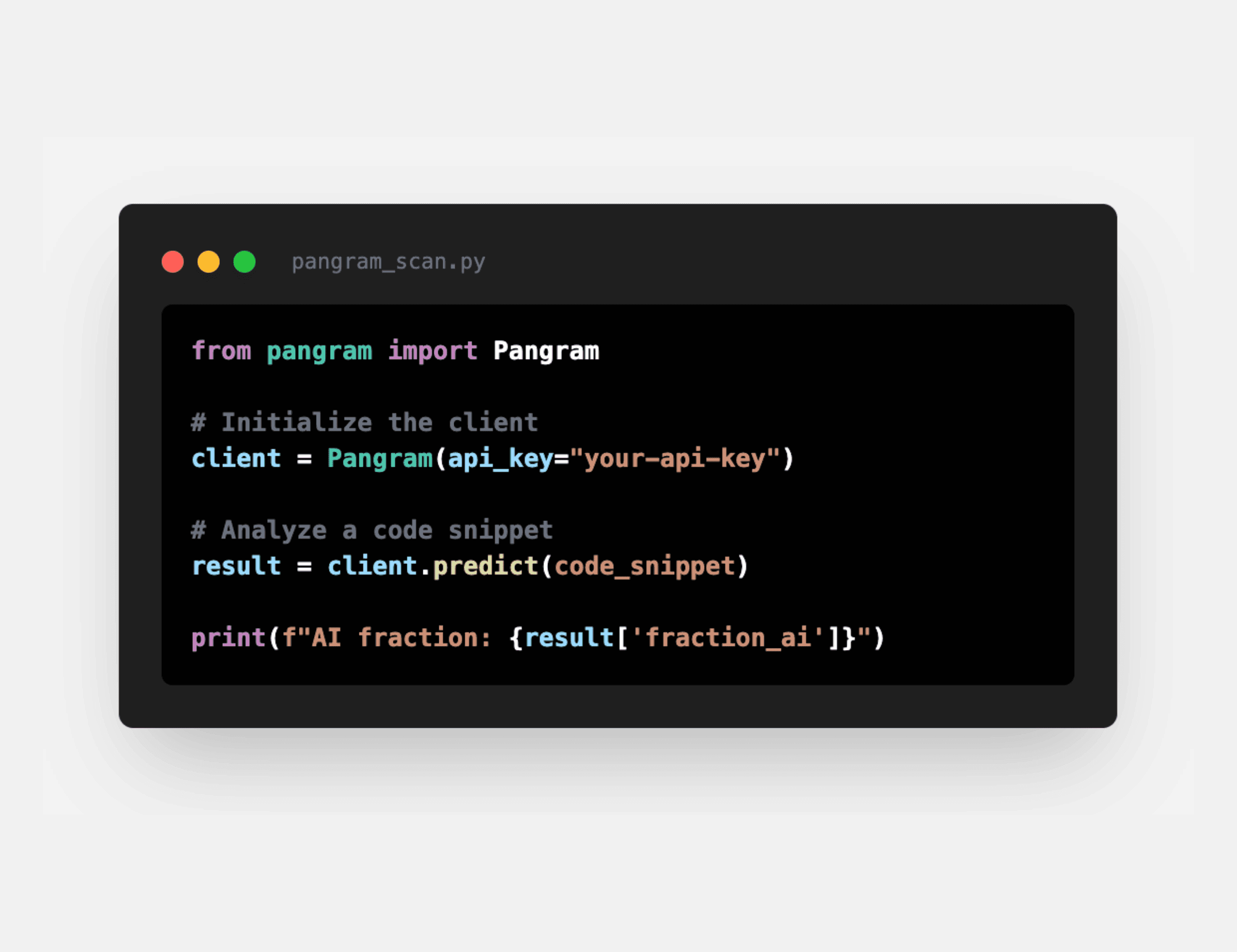
AI Code Detector: How to Check if Code Was Written by ChatGPT, Copilot, or Claude

Academic Integrity Isn’t Just About Catching Cheaters. It’s About Teaching Students to Own Their Mistakes.

Walking Through AI’s Most Overused Phrases
Introducing Pangram’s Plagiarism Detection
Why Recruiters Need AI Detection

How to detect AI in Google Docs