

AI detection for legal professionals

AI detection for law firms

Protect your firm's reputation and mitigate liability. The most accurate tool for AI legal document review to detect ChatGPT, verify legal citations, and ensure authentic authorship in every filing.

AIアシスタントを検出
99.98%以上の精度
無料小切手
第三者検証済み

SOC 2 Type 2 certified. GDPR compliant. Your data stays yours.

メリーランド大学シカゴ大学

メリーランド大学やシカゴ大学を含む第三者機関により、市場で実証済みで最も信頼性 が高く正確なAI検出ツールとして評価されています。

Trusted by Compliance &
Enterprise Teams
キャンバスGoogle Classroomクオラトレモー透明性企業ニュースガードキャンバスGoogle Classroomクオラトレモー透明性企業ニュースガード

当社の製品

GenAI is here. So are the risks.

AIセグメント分析

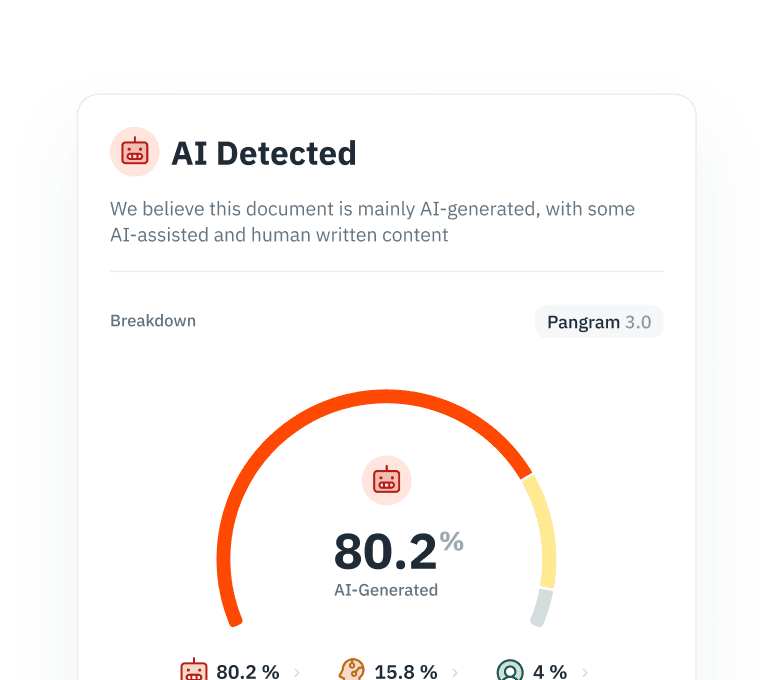
Prevent Hallucinations

Generative AI is prone to inventing case law. Use our detector to flag AI generated briefs that require enhanced scrutiny before they reach the court.

AI Assistance Detection

Secure Client Confidentiality

We are SOC 2 Type 2 certified and GDPR compliant. Unlike free checkers, we never use your sensitive legal contracts or discovery data to train our models.

剽窃チェッカー

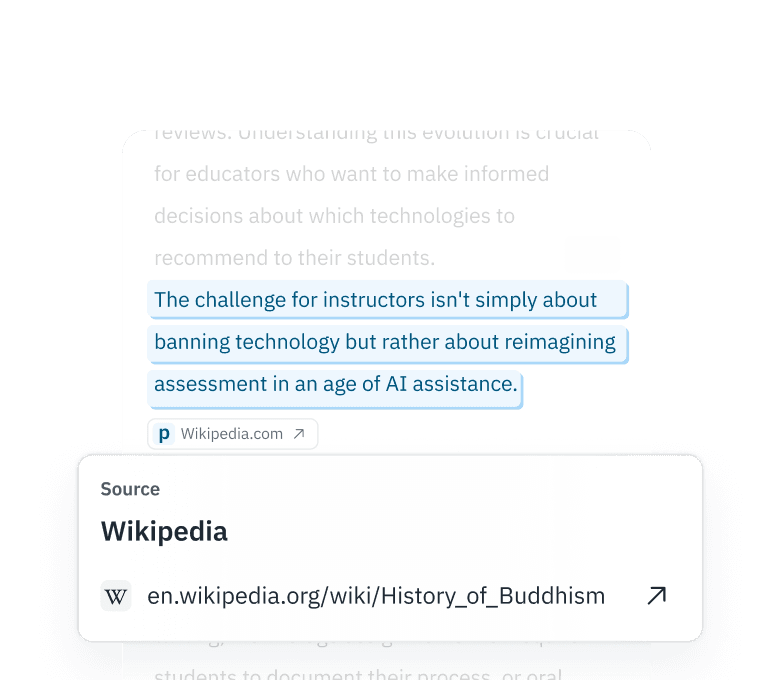
Defensible Due Diligence

Create an audit trail. Using a verified AI legal checker demonstrates professional competence and reasonable care in the age of AI.

Legal workflows

AI coverage
for legal workflows

From contract drafting to discovery, Pangram provides AI detection across every stage of the legal document lifecycle.

Contract & IP Verification

Ensure drafted clauses are original. Verify AI for legal contracts to protect intellectual property and avoid generic, unenforceable LLM boilerplate.

Research & Memo Validation

Paralegals and associates use AI for legal research summaries daily. Verify their output to distinguish between human analysis and machine summarization.

Bulk Document Review

Scan thousands of files instantly. Use our API to perform AI legal document review on data rooms and discovery dumps to identify synthetic content.

20以上の言語に対応しています

当社のAI検出技術は20以上の言語に対応しており、世界中の機関や企業にとって真にグローバルな多言語ソリューションとなっています。

訓練を受けた人間を上回る

独立した研究により、PangramのAI検出技術は、AI生成コンテンツの識別において訓練を受けた人間の読者を上回る性能を発揮することが示されている。

人間化されたテキストを検出する

パングラムは、AI生成テキストが「人間らしく」加工された後、あるいはAI検出を回避しようとするツールで処理された後でも検出可能であり、信頼性の高い検出を保証します。

正確性が確認済み

当社の正確性と信頼性は、第三者の研究者および教育機関によって独立して検証されています。

解決策

Protect authenticity in your firm

Hard Negative Mining illustration

Avoid False Positives

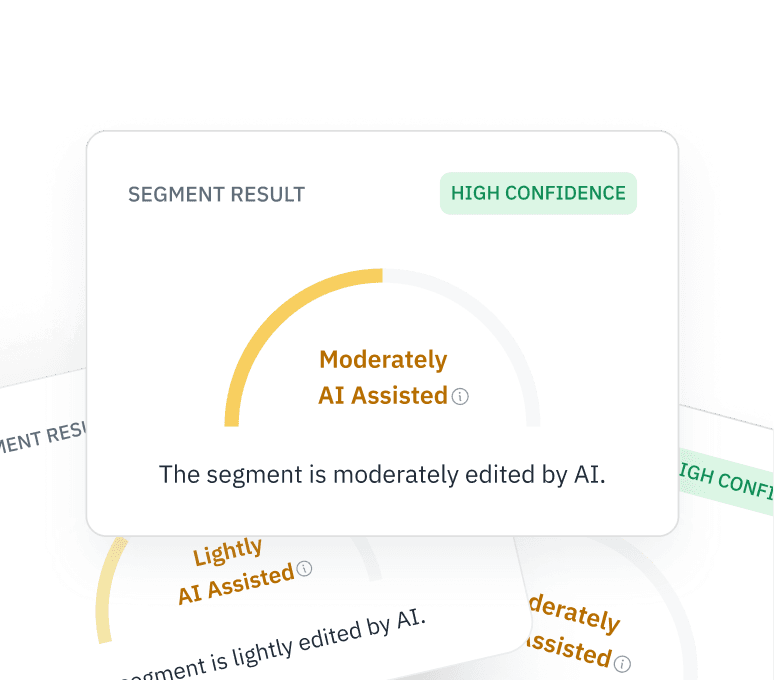
Legal language is formal and repetitive — traits that confuse standard detectors. Pangram uses “Hard Negative Mining” to ensure human-written legalese isn't falsely flagged as AI.

Granular Reporting illustration

Granular Reporting

Don't reject the whole document. Our “Mixed Content” scoring highlights exactly which clauses are AI-generated vs. human-edited, allowing for nuanced review.

特徴

Integrate detection into
your firm's tech stack

01

Bulk Document Review

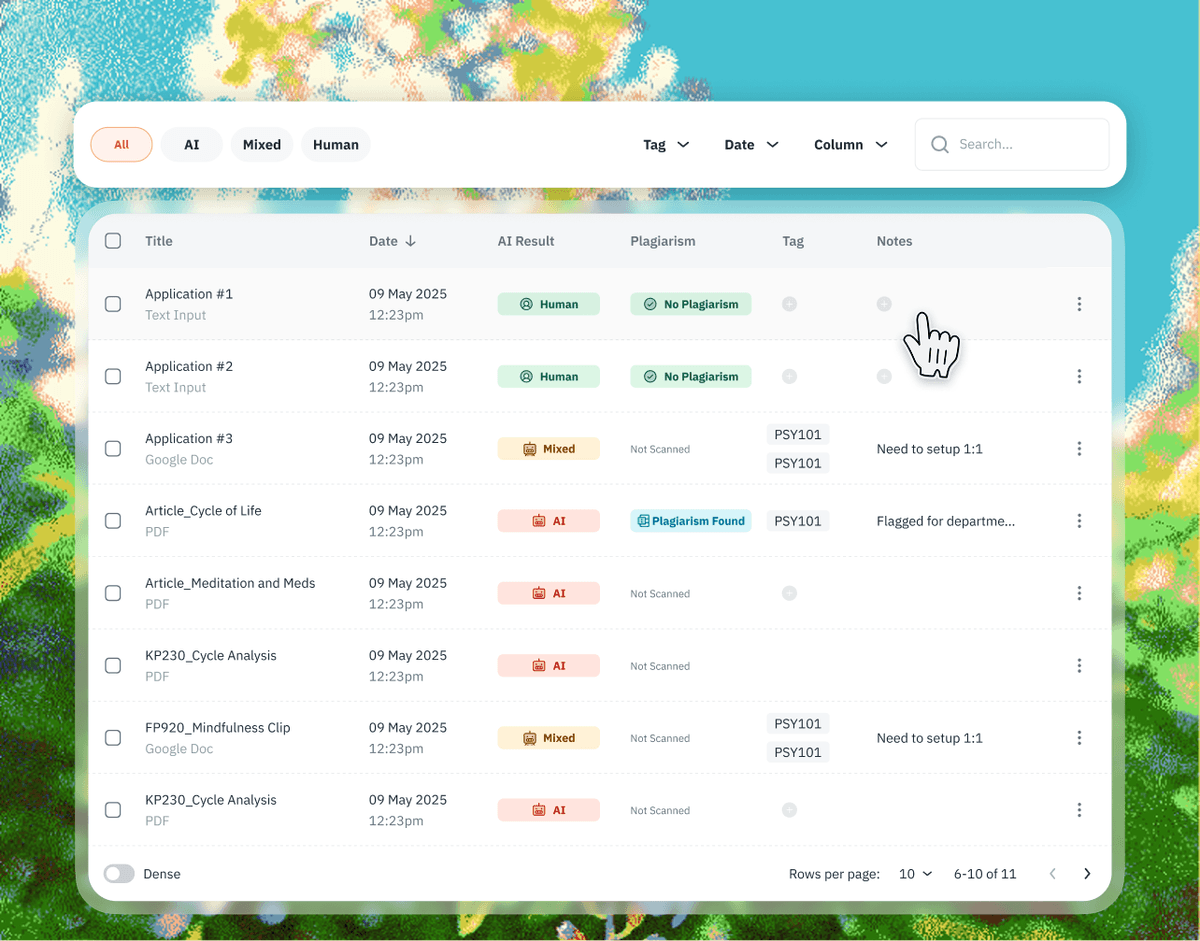
Scan thousands of documents at scale. Integrate AI detection into your document management system for automated review of contracts, briefs, and discovery materials.

Get Enterprise Access →

Bulk Document Review

03

API

解決策

Our API is perfect for high-volume legal document review with custom pricing options for law firms and enterprise.

View API Docs →

02

Google Doc &

Chrome拡張機能

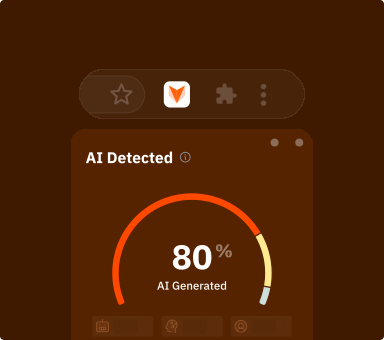
Check legal documents in Google Docs, email, or any web-based platform without leaving your browser. One click to scan.

今すぐダウンロード →

Chrome拡張機能

よくある質問

AI検出に関するよくある質問

答えをお探しですか?よくある質問
を閲覧し、必要な情報をすべて一か所で入手しましょう。

AI detection should be treated as a probabilistic signal, not dispositive proof. It is best used as a due-diligence and risk-flagging tool that informs human review. In practice, firms rely on detection results to identify passages requiring closer scrutiny by a qualified attorney or expert witness rather than as standalone evidence.

No. Documents are processed ephemerally and are not retained, indexed, or reused. Content is never used for model training or shared across customers. This design supports confidentiality obligations, trade-secret protection, and privilege preservation common in legal practice.

Yes. Pangram identifies AI-assisted authorship, not just fully generated text. This allows firms to distinguish between entirely AI-drafted sections, AI-generated drafts that were subsequently edited by a human, and fully human-authored content. This is particularly useful for validating pleadings, contracts, and memoranda that may have originated from generative tools but were refined during legal review.

Legal writing presents unique challenges due to its formal tone, structured syntax, and precedent-based language. Pangram is tuned to reduce false positives caused by boilerplate clauses, statutory language, and citation-heavy sections. Results are delivered with granular confidence signals so attorneys can apply professional judgment rather than relying on binary labels.

Yes. Many firms use AI detection as part of internal review workflows to validate junior associate drafts, ensure compliance with firm AI-use policies, review filings before submission, and audit vendor- or contractor-produced legal content. This supports consistent standards without restricting legitimate productivity tools. Engineering teams use similar workflows — see our AI code detection for developers.

Yes. Pangram's processing model is designed to minimize data exposure, avoid persistent storage, and prevent cross-document learning. This aligns with common interpretations of confidentiality obligations under professional conduct rules, though firms should always review usage under their own risk framework.

Yes. Pangram offers API access that can be integrated into document management systems (DMS), contract lifecycle management (CLM) platforms, internal review tools, or custom workflows. This allows detection to occur before filing, execution, or client delivery, rather than as an after-the-fact audit.

No. AI detection is a decision-support tool, not a substitute for legal judgment. Its value lies in surfacing risk signals efficiently so attorneys can focus attention where it matters most — similar to how e-discovery, contract analytics, and citation checkers are used today.

Protect your firm. Start detecting AI today.

Mitigate liability, secure client confidentiality, and maintain the highest standards of professional diligence.