AI code detection for engineering teams

AI code detector for developers

Detect AI-generated code from ChatGPT, Claude, and GitHub Copilot in Python, Java, C++, and more. Conservative detection tuned for low false positives.

pangram_scan.py
from pangram import Pangram

# Initialize the client
client = Pangram(api_key="your-api-key")

# Analyze a code snippet
result = client.predict(code_snippet)

print(f"AI fraction: {result['fraction_ai']}")

家全球品牌信赖之选
画布谷歌课堂Quora特雷莫透明度公司新闻卫士聊天PDF精选哈罗地平线Qwoted监考员精英导师已验证我的写作振动等级WHE维基教育画布谷歌课堂Quora特雷莫透明度公司新闻卫士聊天PDF精选哈罗地平线Qwoted监考员精英导师已验证我的写作振动等级WHE维基教育

Use cases

Secure your software
supply chain

Gain visibility into AI-generated code across your organization. Validate hiring, protect IP, and mitigate security risks with the most accurate AI code detection engine.

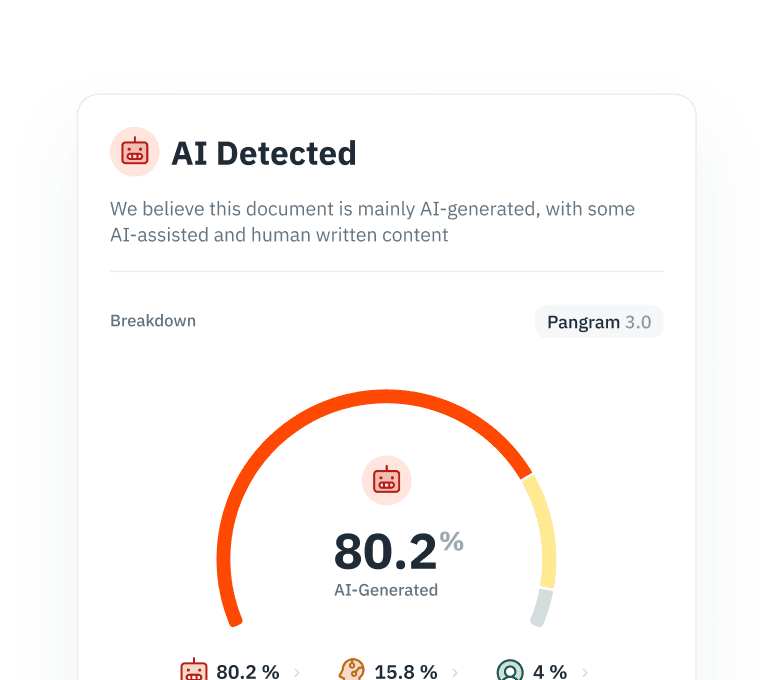
AI Code Detection Result

Verify Technical Hiring

Don't hire a prompt engineer for a backend role. Detect AI code in take-home assignments to ensure candidates understand the logic they submit.

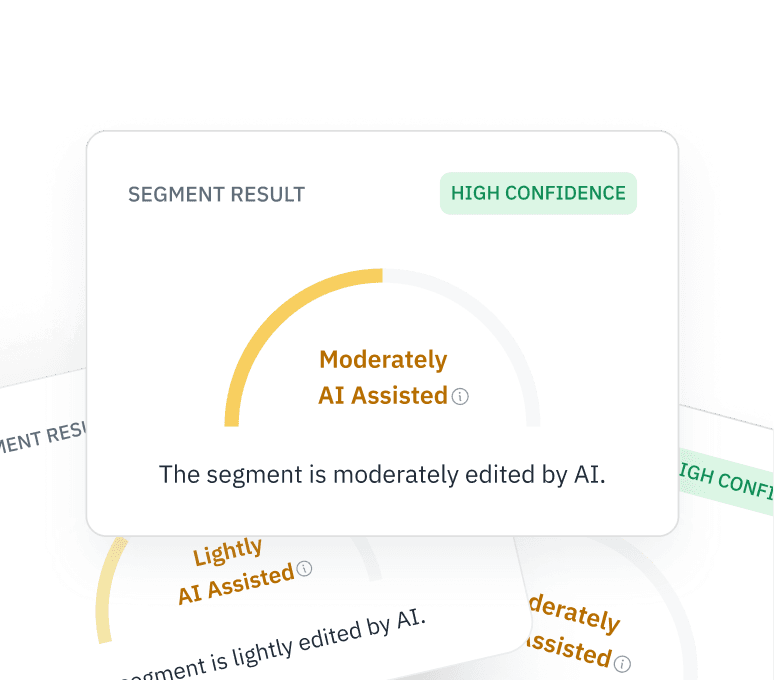
AI辅助检测

Protect Intellectual Property

AI-generated code cannot be copyrighted in many jurisdictions. Audit your repositories to ensure proprietary software isn't built on synthetic, non-licensable foundations.

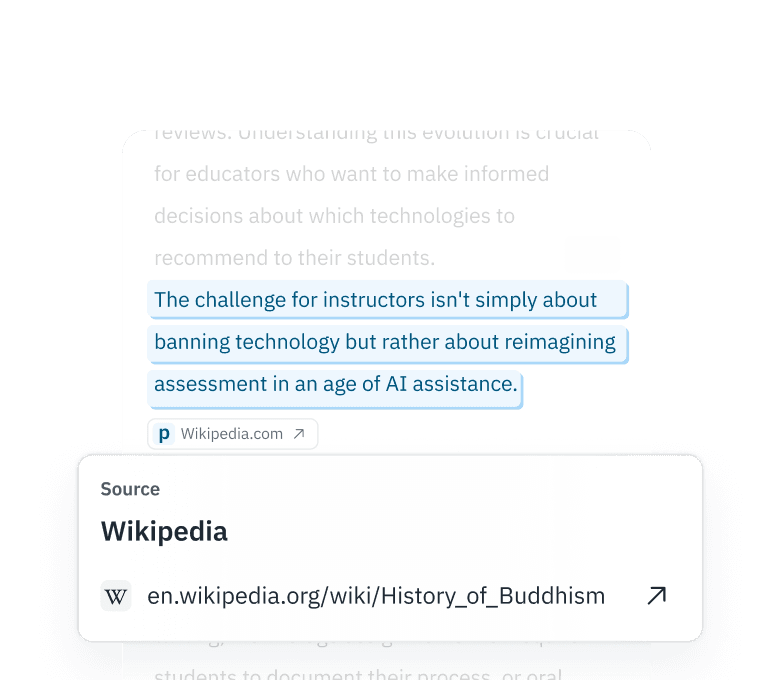
Code Plagiarism Checker

Mitigate Security Risks

AI-generated snippets often contain subtle logic bugs or security hallucinations. Flag AI-heavy commits for deeper human code review before merging.

Technical approach

Conservative detection
for code

Pangram's code analysis is purpose-built for software — not repurposed from text detection. Our model understands syntax constraints, structural patterns, and the difference between boilerplate and original logic.

Low False Positives

Pangram is tuned to be conservative — it rarely flags human-written logic as AI, ensuring you don't falsely accuse developers for using standard boilerplate.

Syntax-Aware Analysis

Unlike text, code has strict syntax constraints. Our model analyzes structural patterns across 40+ lines of code to distinguish between human logic and LLM predictability.

Multi-Language Support

Accurate detection across high-level languages like Python and Java, as well as lower-level languages like C++ and C. Additional languages added as model coverage expands.

Integration

Automated AI code
detection via API

01

Python 软件开发工具包

Drop-in integration for your backend pipelines. Install pangram-sdk and start scoring code snippets in minutes.

View Docs →

02

Hiring Platforms

Integrate with technical assessment platforms to automatically flag suspicious submissions in coding challenges.

了解更多 →

03

Batch Audits

Scan entire repositories or pull requests to assess the density of AI code detection across your project history.

Get API Key →

常见问题解答

AI检测常见问题解答

Common questions about AI code detection
for developers and engineering teams.

Yes. Pangram is trained on outputs from GPT-4, Claude, and LLaMA-based models, which power tools like GitHub Copilot. This allows Pangram to identify common AI-generation patterns even when the code has been lightly edited by a human.
Generally no. Pangram is intentionally conservative with short or highly standardized snippets (imports, getters/setters, config templates). These patterns lack enough statistical signal to confidently attribute authorship, so the model focuses on higher-entropy logic where AI and human styles meaningfully diverge.
For best results, we recommend 40–50+ lines of code. Very short snippets don't provide enough structure or stylistic variance for high-confidence classification, especially across common languages like Python and JavaScript.
Pangram currently supports detection across widely used languages including Python, JavaScript/TypeScript, Java, C++, and Go, with additional languages added as model coverage expands. Detection accuracy improves for languages with strong representation in modern LLM training data.
Yes — to a degree. Pangram does not rely on simple token fingerprints. Instead, it evaluates structural, stylistic, and probabilistic features that often persist even after human edits, particularly in complex logic, error handling, and function composition.
Yes. Changes like renaming variables, reformatting, or adjusting whitespace typically do not remove the underlying signals used for detection. However, deep semantic rewrites can reduce confidence, which Pangram surfaces via probabilistic scoring rather than binary flags.
Pangram supports granular highlighting, allowing teams to see which sections of a file appear AI-generated versus human-written. This is especially useful for large files, pull requests, or legacy codebases with incremental AI usage.

Yes. Pangram provides a high-throughput API designed for automated analysis in CI pipelines, pre-merge checks, internal audits, and research workflows. Many teams run detection on pull requests or nightly scans rather than blocking commits outright.

No. Pangram is designed for visibility and governance, not enforcement by default. Most teams use it to understand where and how AI is entering their codebase, support policy compliance, or audit third-party contributions.

Accuracy depends on language, code length, and complexity. Pangram is most reliable on longer, logic-heavy code and intentionally avoids overconfident claims on low-signal inputs. Results are returned with confidence scores to support human review. For a deeper look at the topic, read our article on whether AI-generated code can be detected.

No. Pangram is SOC 2 Type II certified. Code submitted via the API is processed transiently and discarded. Customer data is never retained or used for model training.

Yes. Some teams use Pangram to flag AI-generated contributions in open-source projects or to support internal reviews where licensing, attribution, or disclosure requirements apply. See how law firms use Pangram for IP and compliance verification.

Increasingly, yes. AI-generated code can introduce subtle vulnerabilities or non-obvious logic flaws. Pangram is often used alongside SAST and dependency scanners to provide authorship context, not vulnerability detection itself.
No — and that's intentional. Pangram returns probabilistic signals and highlights, not a single absolute label. This reflects the reality of modern development, where AI and human contributions are often blended.

Start detecting AI code today

Secure your codebase, validate your hires, and gain full visibility into AI usage across your engineering organization.